
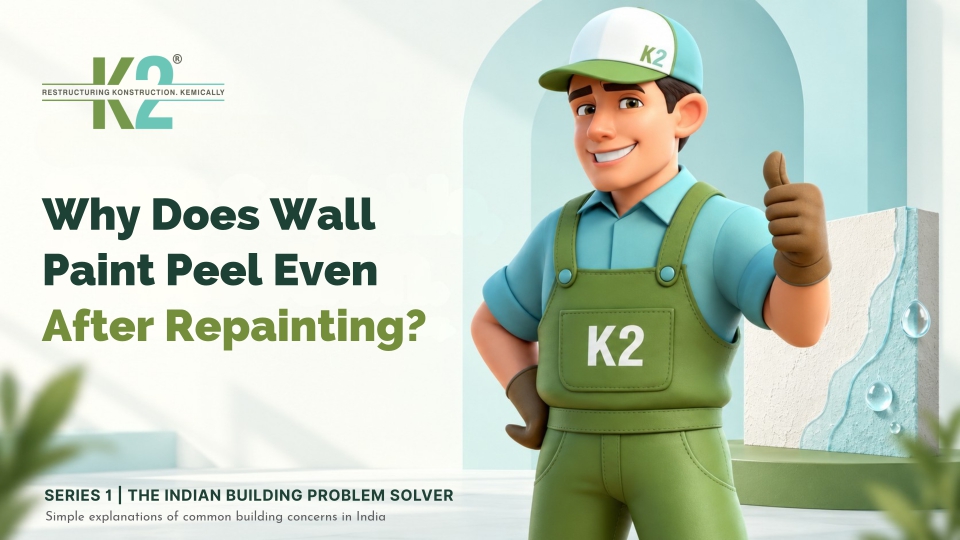
Fresh paint can start peeling when damp patches, salts or a weak plaster surface remain underneath. This is common around external walls, bathrooms and areas with recurring seepage.
Paint is a finish, not a method of stopping water movement. A leaking pipe, rainwater penetration or moisture trapped in a wall can weaken the bond between the wall and the coating.
Check where the moisture comes from before scraping the affected area. Inspect plumbing, external cracks, terrace edges and drainage. Let the source of moisture be addressed, and prepare sound, dry surfaces as required by the selected system.
Before selecting a material, consider the age of the construction, the condition of the base, how water or movement affects the area, and whether the work needs professional assessment. Work should follow the project specification and manufacturer instructions. A small sample or trial area can be useful where surface conditions vary.
Where K2 Products Are Best Suited
K2 Hydroseal is designed as a pre-putty waterproofing coating, whereas K2 Primecrete and K2 Dampcoat serve different coating applications. Choosing the right product depends on the substrate type, surface condition, and level of exposure.
Before application, always refer to the product’s Technical Data Sheet (TDS) for guidance on compatible substrates, surface preparation, mixing requirements, coverage, application conditions, and limitations. A product suitable for one surface or application may not necessarily be suitable for another.
A durable repainting job starts with identifying the cause of peeling, not simply adding another coat.
For a specific project, share the surface type, location and main concern with the responsible contractor or technical advisor before finalising a material.
Next: Why Do Bathroom Walls Stay Damp?

 www.facebook.com
 www.instagram.com
 www.linkedin.com
 www.youtube.com