
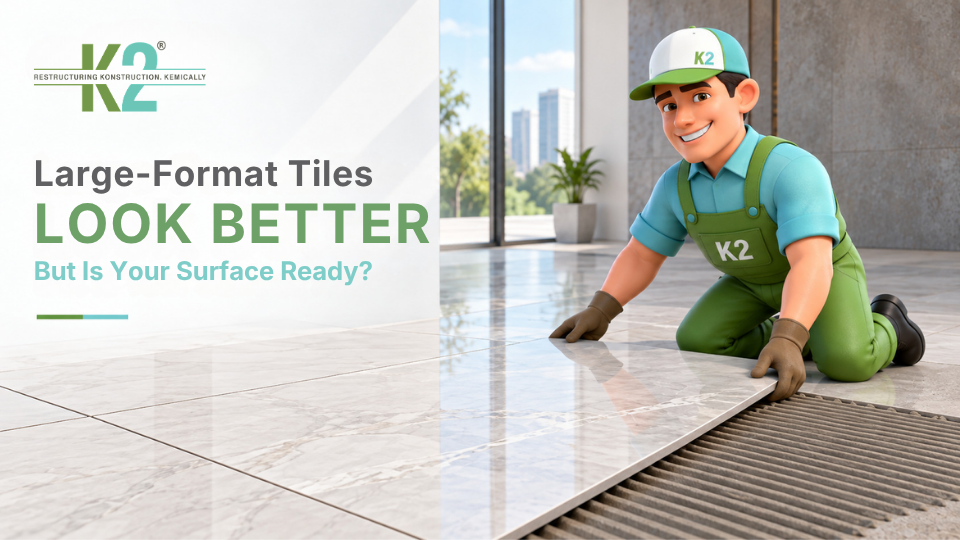
Large-format tiles have become a popular choice in modern homes, offices, hotels and commercial interiors. Fewer joints and larger surfaces can create a clean, seamless look.
But bigger tiles also demand better surface preparation.
Why Does Surface Flatness Matter?
Small tiles can adjust more easily to minor surface variations. With large-format tiles, even small undulations in the floor or wall can become more noticeable.
An uneven substrate may lead to:
This is why the surface should be sound, clean and properly prepared before installation begins.
Don't Use Adhesive to Hide Every Surface Problem
A common mistake is trying to compensate for major surface irregularities simply by increasing adhesive thickness.
For large-format tiles, the better approach is to identify and correct significant surface variations first, then proceed with the appropriate adhesive system.
Professional large-format tile installation guidance similarly places substrate flatness among the most important factors for achieving good coverage and reducing lippage.
Start With the Surface
Large-format tile installation does not begin when the first tile is placed. It begins with the surface underneath it. A flat, clean and properly prepared substrate creates the foundation for better bonding, better alignment and a better-looking finished floor or wall.
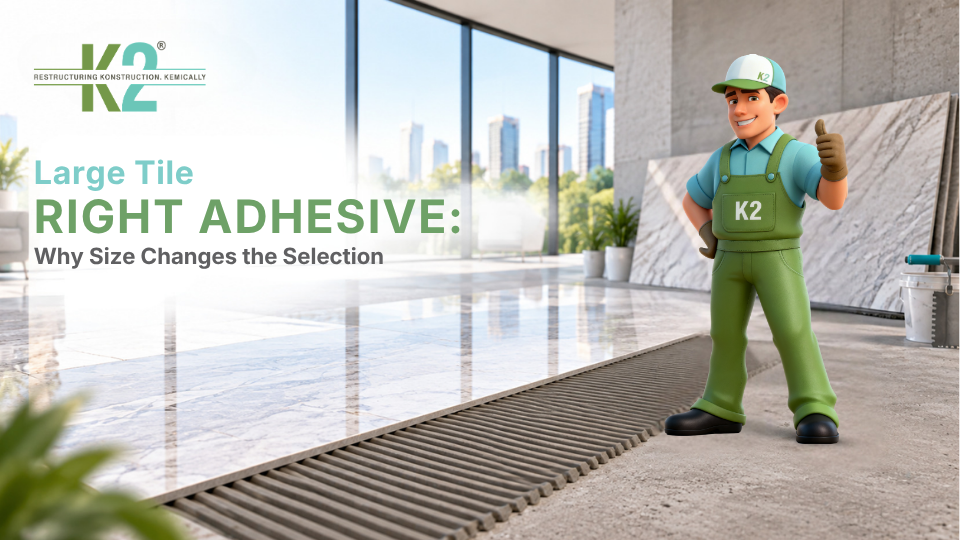
Next in Part 2: Why large-format tiles need the right adhesive—not just more adhesive.

 www.facebook.com
 www.instagram.com
 www.linkedin.com
 www.youtube.com